Operation7 min
How to read FANUC alarms and respond correctly
The most common alarm codes, what they mean, and what you can do yourself before calling a technician.
Read the article6 min readAlex Power technical team
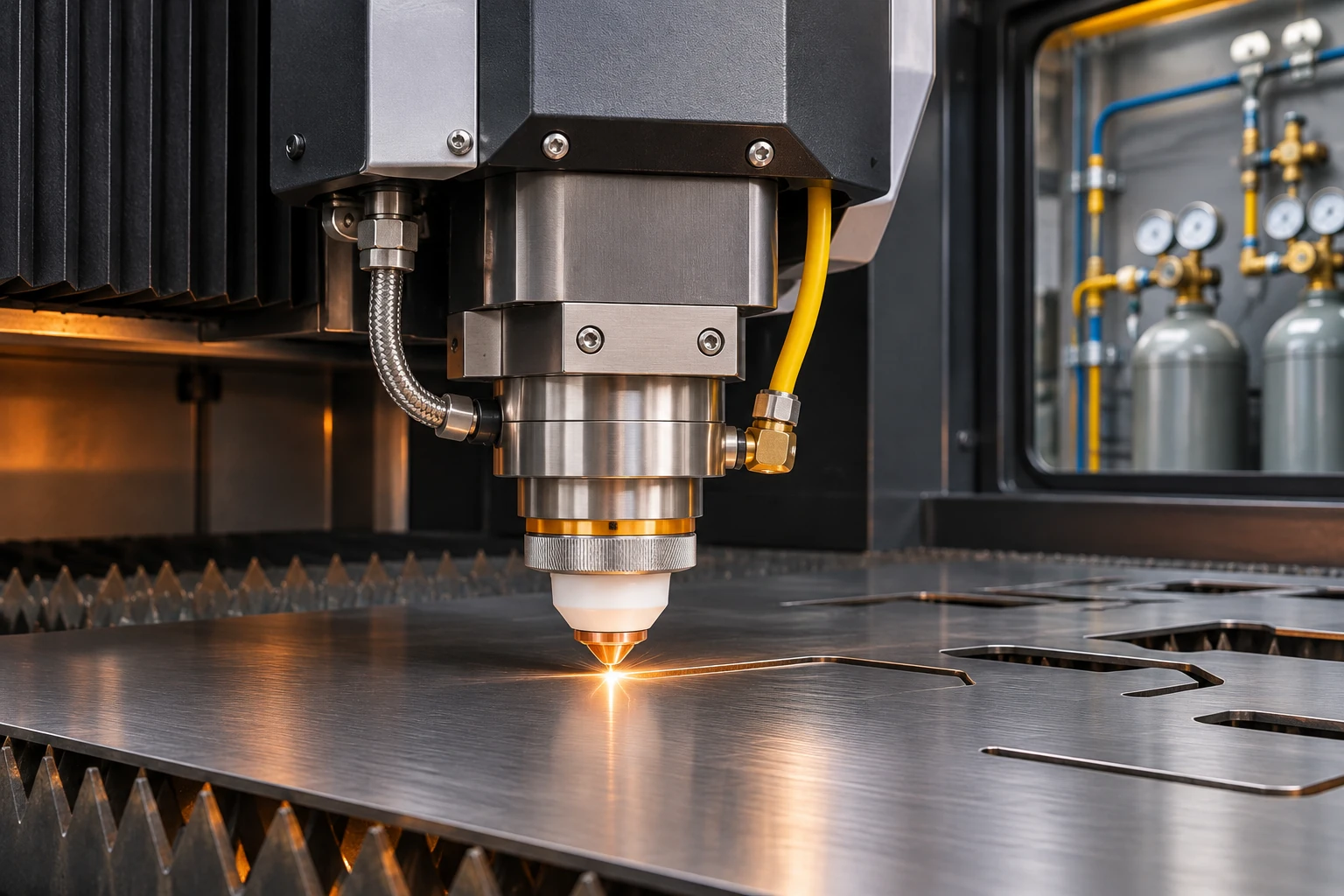
The assist gas in laser cutting is not a small detail: it decides cutting speed, edge quality and cost per metre.
| Gas | Materials | Edge | Cost |
|---|---|---|---|
| Oxygen | Mild steel, especially thick | Oxide layer | Low |
| Nitrogen | Stainless and aluminium | Clean and bright | High |
| Compressed air | Thin sheet | Acceptable, light oxidation | Lowest |
Oxygen reacts with steel and adds energy to the cut, so it cuts thicker material with less laser power. The downside is an oxidised edge that must be removed before painting or precision welding.
An inert gas that blows the molten metal out without reacting. The edge comes out clean and ready for welding and painting, but gas use is much higher because of the pressure needed.
An economical option for thin sheet, provided the compressor, dryer and filters are right. Any moisture or oil in the air reaches the lens and damages it.
Chain gas cylinders upright in a well-ventilated place away from the cutting area. Never use a regulator made for a different gas.
A clean edge also makes the next bending step easier — see our press brake safety rules. Browse our laser machines or send a quote request with your materials and thicknesses.
The most common alarm codes, what they mean, and what you can do yourself before calling a technician.
Read the articleTravel, spindle speed, taper and controller: the questions to ask before you buy.
Read the articleFrom water quality to wire tension: a quick check before changing parameters.
Read the article